
The Irish Weather Almanac
Every record, storm, flood, frost and heatwave in the daily weather files of Met Éireann, the Met Office and Ireland's historical registers, gathered in one place and checked. Scroll down for a short tour of Irish weather history, or jump straight in.
What would you like to do?
Now

Ask the almanac
Ask a question about Irish weather and get an answer worked out only from the almanac’s own records, with a link to where each figure comes from.
Answers are written by an AI model (Meta’s Llama, run on Cloudflare) from the almanac’s data alone, and can still be wrong: follow the links to check a figure.

2026 so far
To 15 November, 2026 has had the 2nd warmest January to October on record, near-normal rainfall, more sunshine than normal and four named storms.
How 2026 ranks so far, month by month →
Next: On course ↓
On course for
How this month and this season are shaping up against the same days of every earlier year, and where they would end if the rest were average.
Next: New records ↓
New records this week
Records set or equalled in the last 7 days of data, nationally, by region, by county and at single stations.
Every new record in the last 7 and 30 days →
Next: Today ↓

The hottest days
On 26 June 1887, at the height of a hot, dry summer, the thermometer at Kilkenny Castle read 33.3 °C. It is still Ireland’s highest temperature on record, though a few have questioned it, and for well over a century nothing came close.
That changed in July 2022, when Phoenix Park in Dublin reached 33.0 °C, the highest temperature in Ireland since 1887. Days above 30 °C, once very rare, have become more frequent since the 1970s: summer 1976, 1995, 2018 and 2022 all brought them.
Next: Cold ↓
The coldest nights
The lowest temperature in Ireland’s records came in the great frost of January 1881: -19.1 °C at Markree (historical), Co. Sligo. Few readings have come close since, but in the bitter December of 2010 Castlederg, Co. Tyrone fell to -18.7 °C.
The longest, most punishing winters were 1947, when snow lay for weeks and February was the coldest on record, and 1962/63, when the frost hardly let up from Christmas to early March.
Next: Warming ↓
A warming island
Each stripe below is one year, from 1931 to 2025, coloured by Ireland’s average temperature: blue for cooler years, red for warmer ones. The last 30 years averaged 0.6 °C warmer than the first 30.
The warmest years on record are 2023, 2025, 2022, 2007 and 2006; the coldest, 1986, 1963, 1979. See the stripes for any station or the trends behind them.
Next: Rain ↓
Deluges and floods
The wettest day on record fell on 18 September 1993, when 243.5 mm of rain was measured at Cloone Lake (Caragh River Area), Co. Kerry, more than a month’s rain in a day.
Ex-hurricane Charley in August 1986 left 207.9 mm at Kilcoole (Treatment Plant), Co. Wicklow and flooded Bray and south Dublin. Winter rain can be just as relentless: in the exceptionally wet spell of early 2026, Glenmacnass, Co. Wicklow collected 527.1 mm in a month. Rainfall records · How rare was that rain?
Next: Storms ↓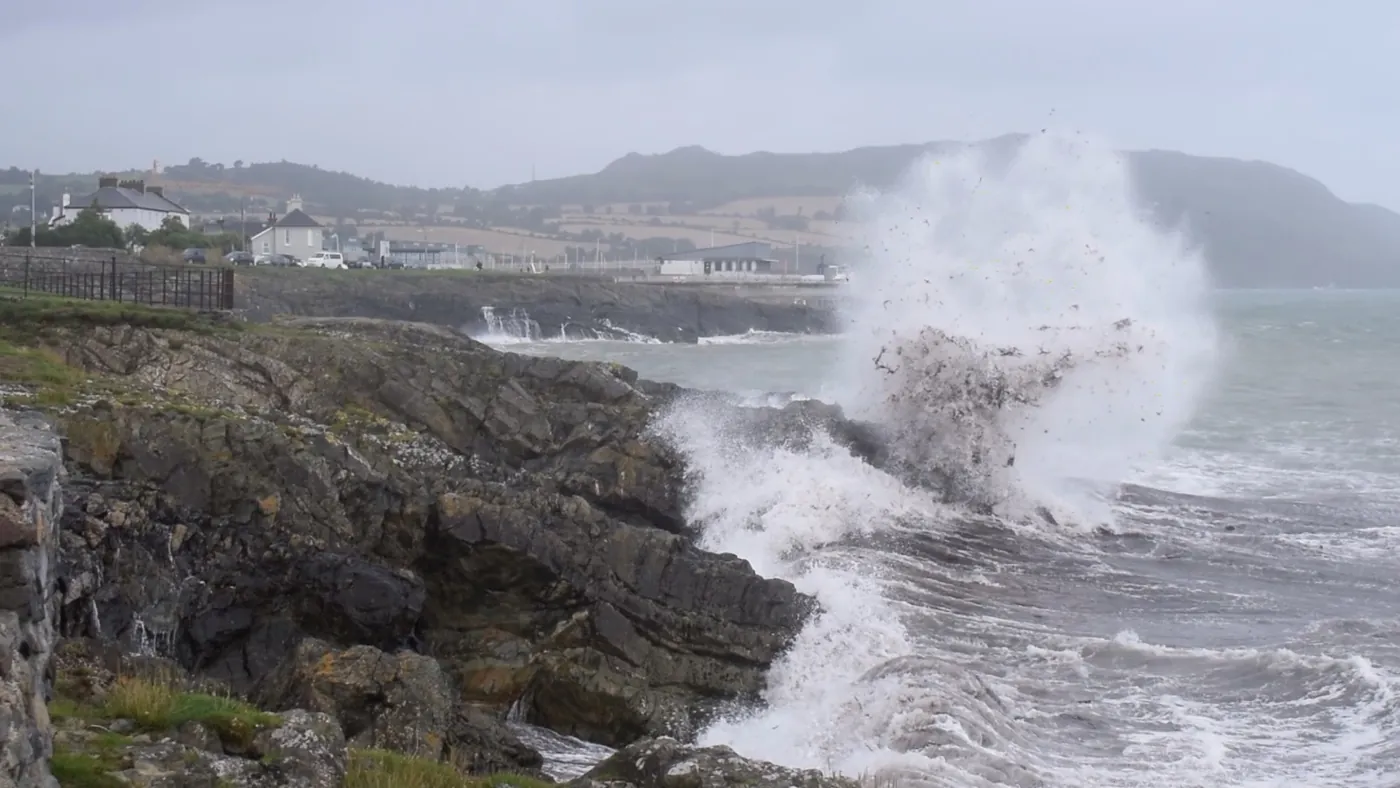
The great storms
The Night of the Big Wind in January 1839 is still the most destructive storm Ireland has known, but it came before any wind was measured. Since the 1940s the strongest gusts on record have come from these storms:
Storm Éowyn in January 2025 set the national record, 184 km/h at Mace Head, Co. Galway. Compare any storms · every named storm
Next: Snow ↓
Snow and ice
Snow is fleeting in most Irish winters, but some years it stays. The deepest snow measured at a station was 45 cm at Casement on 31 December 1962.
The winter of 1947, the Big Snow of January 1982 and the Beast from the East and Storm Emma in 2018 all cut off towns and villages for days. Snowfall history
Next: Sun and drought ↓
Sunny summers and droughts
Dry years are rarer than wet ones in Ireland, but they leave a mark. 1887 was the most intense drought in the island’s long rainfall record, when Glasnevin had barely half its usual rain. Summer 1976 and summer 2018 brought hosepipe bans and parched fields.
Sunshine records · droughts and dry spells
Next: The sea ↓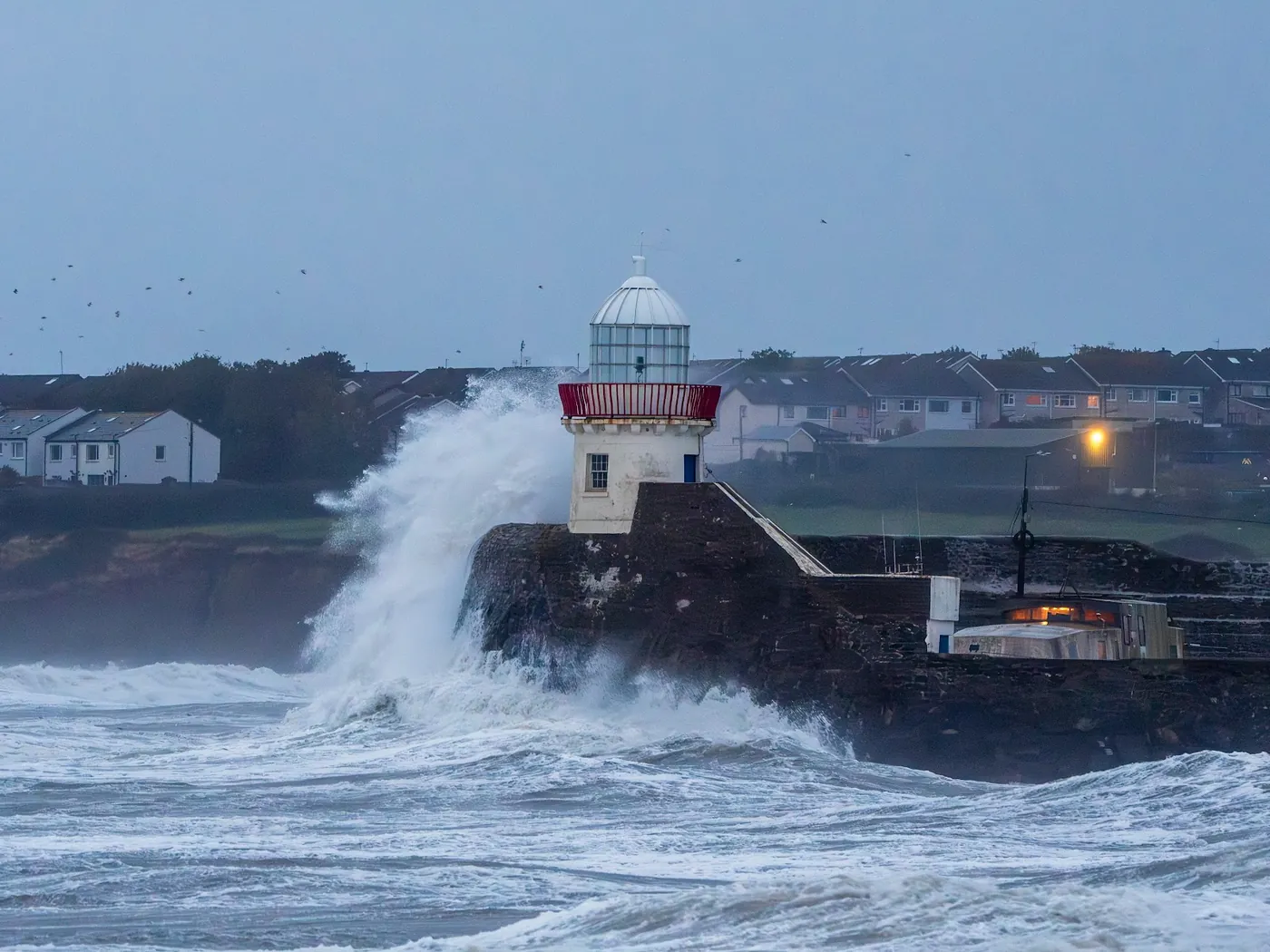
Out at sea
Ireland’s weather buoys ride out the storms offshore. The highest significant wave height they have recorded is 17.2 m at M6 (9 December 2007), and the highest single wave 29.9 m at M6 (28 October 2020).
Buoys, sea temperatures and storms at sea
Next: Sky forecast ↓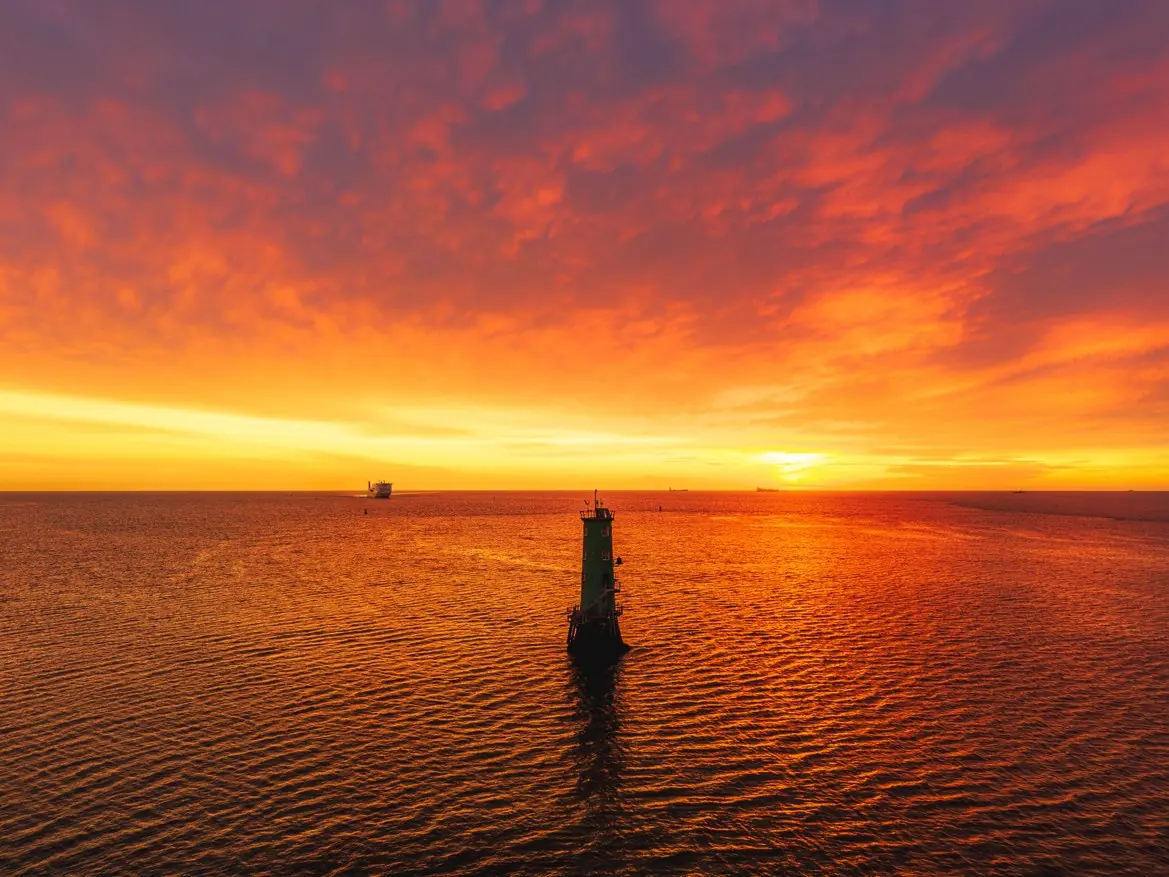
Will the sunset be worth it?
A live forecast of how colourful sunrise and sunset will be across Ireland over the next four days, from the latest weather model run, with the reasons behind each score: cloud height, a clear horizon, haze and the wind.
It follows the method in Sryan Bruen’s e-book Mastering the Prediction of Sunrises and Sunsets, with a guide to reading the sky yourself. Daily forecasts are posted on Instagram at @irishskiesforecasts.
Next: Your turn ↓